Bedding · Mattress education
How Wool Toppers Balance Cushioning and Temperature
A wool topper can make a firm mattress feel more forgiving while helping manage warmth and moisture. The result depends on more than the fiber itself: fill, thickness, cover, fit, and care all shape how it performs night after night.
There is a particular kind of bedtime dissatisfaction that is easy to misdiagnose. The mattress seems sound, but its surface feels too hard at the shoulder or hip. Or it is comfortable at first, then becomes warm and clammy as the night wears on. Replacing an entire mattress may be an expensive answer to a problem that belongs, at least partly, to the layer above it.
A wool topper is one possible middle course. It adds a cushioning layer to the bed, but it does not replace the mattress’s underlying support. At the same time, wool’s ability to take up and release moisture can help moderate the feel of the sleep surface. These are useful qualities, not guarantees: no material can promise that every sleeper will feel cooler, sleep better, or wake without discomfort.
For Westchester residents comparing bedding, the practical question is not simply whether wool is natural or appealing. It is whether the construction suits the mattress, the sleeper’s preferences, the room’s conditions, and the household’s tolerance for upkeep. A careful comparison can prevent a common mismatch: buying softness when what is needed is support, or choosing a low-maintenance appearance attached to a product that requires specialized care.
What a wool topper changes—and what it does not
A topper sits on top of a mattress, beneath the fitted sheet. Depending on its thickness and construction, it can change how the surface feels by adding a degree of cushioning and reducing the immediate impression of firmness. Wool fibers compress under weight, then recover to varying degrees. The sensation is usually less like sinking into a deep foam layer and more like resting on a padded, resilient surface, though the exact feel varies with density and design.
That distinction matters. A topper can influence surface comfort, but it generally cannot correct a mattress that has lost structural support, developed a deep body impression, or no longer suits the sleeper’s needs. A soft layer on an unsupportive mattress may mask the issue temporarily without resolving it. Before shopping, assess the mattress itself: Is it level? Does it sag? Is the discomfort concentrated at the surface, or does the whole bed feel inadequate?
Thickness is part of the answer, but not the whole answer. A lofty topper may produce a more noticeable change; a thinner pad may add only a modest buffer. Fill quantity, fiber arrangement, quilting, and the fabric surrounding the wool affect how evenly the layer distributes pressure and how it holds its shape. Product descriptions do not always use “pad” and “topper” consistently, so examine dimensions and construction rather than relying on the label alone.
Why wool can feel balanced across seasons
Temperature comfort is personal, and the bedroom environment plays a large role. Still, wool has a useful relationship with moisture: the fibers can absorb some water vapor and release it as surrounding conditions change. This can help the bedding feel less damp against the body than a surface that holds moisture close to the skin. Wool is also an insulating fiber, so it is not simply a “cooling” material. Its appeal lies in moderation—helping create a more balanced microclimate rather than delivering a chilled sensation.
That balance can be valuable for people whose comfort shifts during the night, or for households that use the same bed through changing seasons. But expectations should remain measured. A wool topper will not control room temperature, replace breathable bedding, or eliminate overheating caused by a warm bedroom, heavy covers, or individual health factors. If heat is a recurring concern, consider the entire sleep setup: pajamas, sheets, duvet weight, ventilation, and the mattress underneath.
Cover fabric matters here. Cotton is commonly used because it is familiar, breathable, and comfortable against the skin. A tightly woven shell may help contain fibers and protect the filling, while a different weave can feel smoother or more textured. Read the material details and check whether the cover is removable. A natural fill paired with a shell that traps heat may not feel as airy as expected; conversely, a well-made cover can support a comfortable surface without adding unnecessary bulk.
Wool’s temperature-regulating reputation should not be confused with a medical claim. It is a material characteristic, not a treatment for insomnia, night sweats, allergies, or other health conditions. If sleep disruption or unusual sweating is persistent, bedding changes may be only one consideration, and professional medical advice may be appropriate.
Compare the fill, not just the word “wool”
Wool toppers can differ in fiber source, processing, fill percentage, and construction. Some use wool as the primary fill; others combine it with plant-based or synthetic fibers. A blend can influence loft, resilience, price, and care needs. The product label or specification should make clear what is inside, rather than relying on broad claims about natural materials.
Ask whether the wool is traceable or certified, and what a certification actually covers. Certifications may address sourcing, processing, or the finished textile, but they do not all establish the same standards. Look for clear documentation and avoid assuming that a term such as “organic,” “natural,” or “hypoallergenic” has a single universal meaning across products. If a particular fiber sensitivity is a concern, review the full materials list and seek appropriate medical guidance where needed.
Construction affects comfort just as much as fiber content. Quilting can help distribute filling and reduce shifting, while ties or straps can help keep the topper aligned. A densely woven wool pad may emphasize protection and a flatter surface; a loftier, more generously filled design may make a more obvious cushioning change. Compare the stated thickness, fill weight if provided, and whether the maker describes the item as a protective pad, a comfort layer, or both.
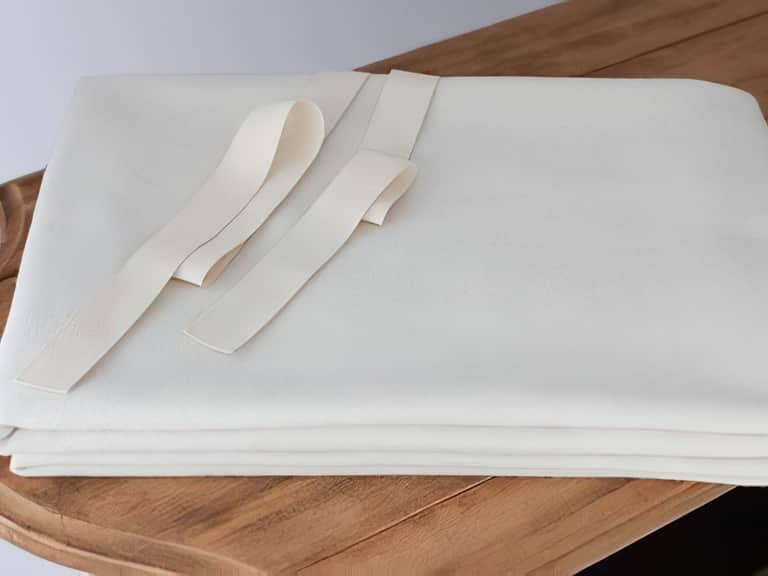
As one example of a wool bedding accessory, the Savvy Rest Wool Mattress Pad is described as a densely woven, moisture-resistant pad with removable cotton corner ties. The maker specifies hand washing in mild detergent and line drying. It is a pad rather than a thick, lofted topper, so shoppers should consider it for its stated construction and modest surface role—not assume it will transform a mattress in the way a deep cushioning layer might.
Fit and attachment: small details, nightly consequences
A topper that slides, bunches, or leaves an exposed edge can undermine an otherwise comfortable bed. Confirm the mattress size and compare it with the topper’s actual measurements. Standard labels such as Queen or King are useful starting points, but dimensions can vary slightly between makers. Also measure mattress depth, including any existing pad or protector that will remain in place.
Attachment systems vary. Some toppers rely on a fitted skirt, some use elastic straps or ties at the corners, and others are held mainly by friction beneath a fitted sheet. Check that the attachment is compatible with the mattress profile and does not pull the layer out of shape. If the mattress is unusually thick, has a pillow top, or sits on an adjustable base, ask the manufacturer how the topper is intended to fit.
Layer order matters, too. In most arrangements, a topper goes directly on the mattress, followed by a protector if the protector is designed to accommodate it, then the fitted sheet. Follow the maker’s instructions: placing a protector above a topper may protect it from spills, but a waterproof or less-breathable layer can change the feel and moisture exchange of the bedding. The fitted sheet must have enough depth to hold all layers without compressing them tightly or popping off at the corners.
For couples, consider whether a shared topper will suit both sleepers. A single continuous layer may make the bed feel more uniform, while different preferences on each side can be harder to accommodate. In that case, compare the cost and practicality of separate layers, and check whether they will stay aligned beneath the sheet. A topper is a comfort adjustment, not a substitute for discussing differences in firmness, temperature, and movement sensitivity.
Care is part of the purchase
“Washable” is not a universal property of wool bedding. Some products can be machine washed on a gentle cycle; others call for hand washing, spot cleaning, airing, or professional care. Water temperature, detergent, agitation, and drying method can affect wool fibers and the shape of the item. The care label should take precedence over general advice about wool.
Before buying, decide whether the specified routine fits ordinary life. Hand washing and line drying may be manageable for a small pad, but more difficult for a large, heavy topper. A product that cannot be machine washed may still be practical if it is protected from spills and aired regularly; it may be a poor fit for a household that needs frequent, simple laundering. Avoid assuming that a removable cover means the wool fill can be washed too.
Routine maintenance is usually straightforward: use a breathable mattress protector where compatible, keep the bed dry, and follow the manufacturer’s instructions for airing and spot treatment. If an accident occurs, address it promptly and use only cleaning methods allowed by the maker. Excess moisture and heat can damage some materials, while vigorous scrubbing may distort the fill or fabric. When uncertain, consult the care guidance before treating a stain.
It is also worth asking about warranty terms and exclusions. Wear, staining, laundering damage, and changes in loft may be treated differently by different manufacturers. Keep the care label and purchase information, and inspect the topper periodically for shifting, compressed areas, loose ties, or damage. These checks cannot restore worn materials, but they can reveal a problem before it becomes more disruptive.
A practical comparison checklist
When comparing wool mattress toppers, focus on the features that affect the actual bed rather than the most dramatic wording on the packaging. A simple checklist can bring the decision into focus:
- Comfort goal: Do you want a slight softening, a more cushioned surface, or mainly a protective layer?
- Fill: Is the item filled entirely with wool or with a blend? Is the fill amount or thickness stated?
- Shell: What is the cover made from, and is it removable or washable?
- Fit: Do the dimensions match the mattress, including its depth and any existing layers?
- Attachment: Are straps, ties, or a fitted skirt included, and will they suit the bed?
- Care: Does the required cleaning method match your household’s routine?
- Return policy: Can the item be returned after opening or testing, and are there fees or exclusions?
- Transparency: Are materials, sourcing claims, warranty conditions, and care instructions clearly documented?
Whenever possible, test the complete arrangement rather than evaluating a topper in isolation. A showroom sample cannot reproduce every home’s sheets, room temperature, mattress age, or sleeping habits. If trying a topper at home, note how it feels over several nights and check whether the fitted sheet remains secure. Comfort can take time to assess, but a written return policy—not an assumption—determines whether a trial is possible.
Common expectations worth reconsidering
One frequent misconception is that “temperature regulating” means always cool. Wool can help manage moisture and insulation, but its warmth will still depend on the fill, the rest of the bedding, and the bedroom. Another is that a topper can rescue any uncomfortable mattress. It may improve the surface feel, but persistent sagging or inadequate support usually calls for a closer look at the mattress itself.
There is also no single ideal level of cushioning. A plush layer may feel inviting to one sleeper and too yielding to another. Body shape, sleeping position, mattress firmness, and personal preference all influence the result. The best comparison is not a universal ranking; it is a clear account of what each construction is designed to change and what it cannot promise.
Finally, natural materials are not automatically maintenance-free or suitable for everyone. Wool requires care, and individual sensitivities vary. Clear information about composition and handling is more useful than a broad claim that a product is inherently healthier or safer. Treat marketing language as a starting point for questions, not a substitute for specifications.
A measured choice for a more comfortable bed
A wool topper earns consideration because it can bring two useful qualities together: gentle cushioning and a material that interacts with moisture and warmth differently from many conventional fills. But “wool” is only the beginning of the comparison. Thickness, density, shell fabric, secure attachment, and cleaning instructions determine whether the layer will feel right and remain practical.
Start with the problem you are trying to solve. If the mattress is structurally sound but too firm at the surface, a cushioning layer may be worth testing. If the bed feels hot, consider the full bedding system and room environment rather than expecting a topper to do all the work. If easy laundering is essential, make care requirements a deciding factor. And if the mattress itself is sagging or no longer supportive, address that before investing in a surface layer.
For a local buyer, the same disciplined approach applies whether shopping online or in a Westchester showroom: verify measurements, read the care label, ask about returns, and distinguish a protective pad from a substantial topper. A little attention to those details can turn a vague promise of comfort into a more informed decision—and a bed better matched to the person who sleeps in it.