Mattress Buying Guide
Natural Latex Organic Mattresses: A Guide to Feel, Support, and Construction
A mattress can be described as natural, organic, firm, or pressure-relieving. Those words are useful only when you understand what lies beneath them. With latex, the experience depends on the material, the way it is processed, the layers around it, and how the finished bed responds to your body.
For Westchester shoppers comparing natural latex organic mattresses, the best starting point is not a promise of perfect sleep. It is a close look at construction: what the latex is made from, how thick each layer is, how firmness is distributed, and whether the complete mattress suits your sleep position and preferences. The right questions can turn a confusing set of labels into a practical comparison.
What “natural latex” tells you—and what it does not
Latex is made from rubber, but not every mattress marketed as latex has the same composition. A core may be made from natural latex, synthetic latex, or a blend. A product described as “natural latex” should be evaluated through its materials disclosure, not the headline alone. Look for an explanation of the latex content and ask whether the description applies to the entire core or only one component.
“Organic” is a separate claim. It can refer to a certified raw material, a component, or a finished product, depending on the claim and the certification involved. A mattress may contain organic cotton or wool without every material in the mattress being organic. If certification matters to you, check the certificate’s scope and the exact product it covers. A natural-material claim, by itself, is not the same thing as an organic certification.
That distinction matters because mattresses are layered assemblies. Latex may sit beneath cotton, wool, or a quilted cover; a model may also incorporate other materials or a separate support system. The whole construction shapes the feel. A latex core can be natural while the cover or other parts have a different composition, so review the complete materials list before drawing conclusions.
For a local buying decision, the same careful approach applies whether you shop online or visit a showroom in Westchester. Ask for the product specification sheet and written details about materials, certifications, warranty terms, and care. Clear documentation is more useful than broad language such as “eco-friendly” or “chemical-free,” which may not explain what is actually in the bed.
The distinctive feel of latex
Latex is often described as buoyant or responsive. When pressure is applied, the material compresses and pushes back, creating a sensation that is different from the slower, more enveloping feel some people associate with memory foam. Many sleepers notice that it is relatively easy to change position on a responsive surface. Others may prefer the deeper contour of a different mattress type.
These descriptions are tendencies, not guarantees. The feel changes with firmness, layer thickness, density, cover tension, and the materials surrounding the latex. A quilted wool layer, for example, adds a surface sensation that a bare latex core would not have. The foundation beneath the mattress also matters: a supportive, flexible base may feel different from a rigid platform, even when the mattress itself is unchanged.
Responsiveness should not be confused with firmness. A mattress can spring back quickly and still feel soft at the surface, or feel relatively firm while remaining lively under movement. When evaluating latex mattress firmness, separate three questions: How much does the top surface cushion your body? How quickly does the bed respond when you move? And how well does it hold your heavier areas without letting them sink too far?
Descriptions such as “medium,” “plush,” and “firm” can help narrow a search, but they are not universal measurements. One maker’s medium may feel firmer than another’s. If possible, test a mattress for several minutes in your usual sleeping positions, and focus on whether your body feels supported rather than trying to match a number on a firmness scale.
Support, pressure relief, and sleep position
Good support is not simply a hard surface. It means that the mattress lets the body settle enough to cushion areas such as the shoulders and hips while keeping the spine in a comfortable, reasonably neutral position. The right balance is personal. Body shape, weight distribution, mobility, and preferred sleeping position can all change how a mattress feels.
Side sleepers often place more concentrated pressure on the shoulders and hips. They may appreciate a surface that allows some contouring, though too much sink can feel restrictive or leave the middle of the body unsupported. Back sleepers commonly look for a combination of gentle cushioning and steady support beneath the pelvis and lower back. Stomach sleepers may prefer a firmer, less yielding surface to limit excessive sinking through the midsection.
These are starting points, not rules. A person who sleeps in several positions may need a compromise that works across them. Partners with different preferences may also need to weigh firmness, motion, and space independently. Latex’s responsive quality can make turning easier for some people, but it does not guarantee reduced partner disturbance; the mattress design and movement of the sleepers remain important.
Pressure relief is sometimes used as if it were a medical promise. It is better understood as a comfort consideration: does the surface cushion the areas that feel tender, without creating uncomfortable sag or making movement difficult? A mattress cannot diagnose or treat pain. If pain is persistent or severe, seek guidance from a qualified health professional rather than relying on a mattress label.
During a showroom test, lie in your normal position long enough to notice whether pressure builds. Check whether your shoulders and hips can settle comfortably on your side. On your back, notice whether the mattress supports you without forcing an exaggerated arch or leaving an uncomfortable gap. If you share the bed, test together when practical; a mattress that feels right alone may behave differently once both people are on it.
How layer design changes the result
Layer arrangement is central to latex mattress support. A mattress with a firm core and a softer comfort layer may feel different from a single firmness throughout, even if both use latex. The upper layer influences initial cushioning; the deeper core contributes to the bed’s overall resistance and support. A thicker comfort layer can create more surface give, while a firmer layer beneath it can limit how deeply the sleeper settles.
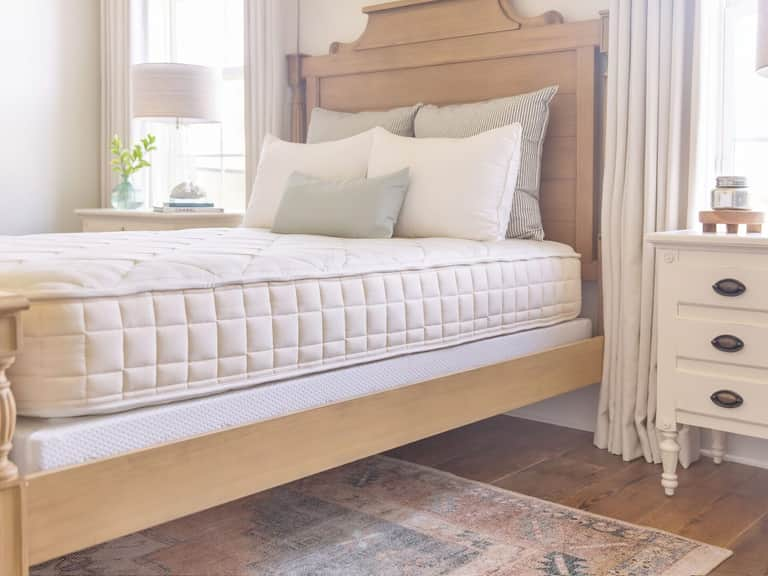
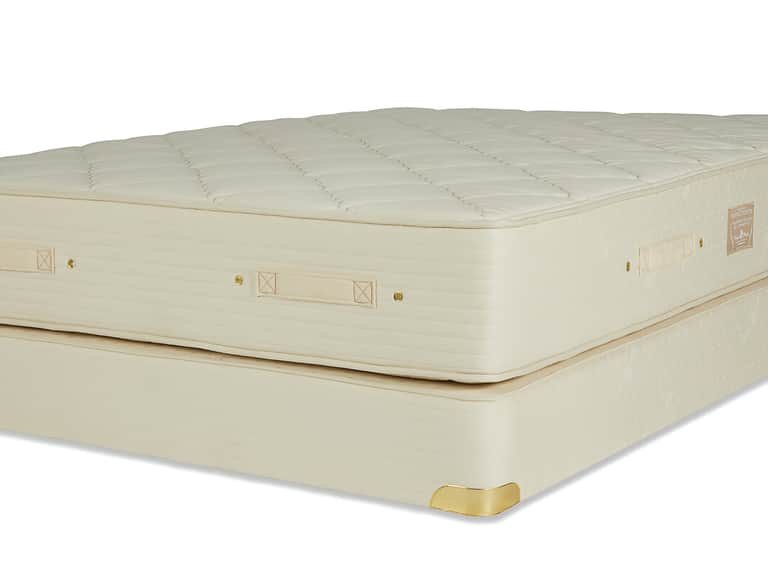
Consider the Royal-Pedic Natural Latex Quilt-top Mattress as one example of how a specification can be read. Its product description lists an approximately eight-inch latex core, comprising a six-inch firm layer and a two-inch medium layer, surrounded by chemical-free French wool and cotton fabric. The description also notes use on an adjustable base. Those details describe a particular construction; they should not be treated as a universal formula for latex beds or as proof that it will suit every sleeper.
When comparing mattresses, ask which layer is on top and whether the layers can be rearranged or replaced. Find out whether the comfort material is latex throughout or whether the quilted surface introduces additional fibers. Confirm the total thickness and whether the stated firmness applies to the whole mattress or to one layer. These details can make two similarly named products feel notably different.
Some latex mattresses combine latex with other support systems, while others use a latex core as the primary support structure. Neither approach is automatically superior. What matters is how the complete design performs for your needs, and whether the seller provides enough information to understand it. Innerspring and hybrid models, for example, offer a different construction and response; a label that says “organic” does not make them interchangeable with an all-latex design.
Dunlop, Talalay, and the limits of shorthand
Natural latex is commonly associated with two manufacturing methods: Dunlop and Talalay. They describe different processes, and mattresses made through either method can vary by formulation, firmness, and manufacturer. Consumers sometimes encounter simplified claims that one method is always firmer, more durable, or better. Such blanket statements can obscure the more important question: how does this particular layer feel and perform in this particular mattress?
Rather than selecting by process name alone, ask the maker for the layer’s firmness and position in the mattress, along with details about the rest of the construction. If the product uses more than one latex layer, find out whether the layers differ in firmness or function. If the terminology is unfamiliar, request a plain-language explanation. A trustworthy description should connect the manufacturing detail to the actual design without claiming that a process guarantees a specific sleep outcome.
Construction details also matter when a mattress is described as breathable or temperature-regulating. Latex’s structure, the cover, wool or cotton components, room temperature, bedding, and the sleeper all contribute to the experience. Natural fibers may be valued for moisture management, but no material can promise that every person will sleep cool in every home.
Organic claims, certifications, and material transparency
For shoppers who prioritize organic materials, certifications can help establish what has been assessed. Read the certification name and scope carefully. Does it apply to the latex, the cotton, the wool, or the finished mattress? Is the product itself certified, or is the claim limited to a component or manufacturing standard? These are different statements, and precise wording helps avoid mistaken assumptions.
Ask for a complete list of materials, including the cover, quilting, fire barrier, adhesives if any, and support layers. If a seller uses phrases such as “non-toxic” or “chemical-free,” ask what specific standard or test supports the claim. No mattress is literally free of chemicals; the useful question is which materials and treatments are present, and how the manufacturer documents them.
Transparency should extend beyond the label to the practical terms. What is the warranty period, and what does it cover? Are body impressions treated differently from manufacturing defects? Does the retailer offer a trial period or return option, and are there fees or conditions? Are delivery, setup, and removal available in your area? A carefully constructed mattress is still a significant purchase, and the policies around it are part of the decision.
A practical comparison checklist
Before choosing among natural latex organic mattresses, write down the features that matter most. A short, consistent checklist can keep a showroom conversation focused and make online specifications easier to compare.
- Materials: Is the latex natural, synthetic, blended, or described another way? What materials make up the cover and remaining layers?
- Certification: Which components or finished-product claims are certified, and can the seller identify the scope?
- Layer design: How many layers are present, how thick are they, and where are softer or firmer layers positioned?
- Feel: Does the surface cushion pressure points while allowing comfortable movement?
- Support: Does your body feel settled and supported in your usual sleep position?
- Foundation: Is your existing base compatible, and does the manufacturer specify slat spacing or other requirements?
- Care: Is the cover removable? What cleaning methods are permitted, and what should never be done?
- Policies: What are the warranty, delivery, trial, exchange, and return terms?
Keep notes after each test. Words such as “comfortable” can blur together after several mattresses; concrete observations are more useful. Record whether your shoulder felt compressed, whether turning was easy, whether the surface felt too warm, and whether you felt supported after lying down for a while. If you are shopping with a partner, make separate notes before agreeing on a shared choice.
Foundations, care, and everyday ownership
A mattress depends on the base beneath it. Follow the manufacturer’s requirements for platform surfaces, slat spacing, center support, and adjustable bases. A weak or incompatible foundation can affect comfort and may also have implications for warranty coverage. If you are moving into a Westchester apartment or changing bed frames, check the base before assuming a new mattress will perform as expected.
Care instructions differ. Some latex mattresses should not be soaked, machine-washed, or exposed to direct heat; a removable cover may have its own cleaning directions. Use a protector if recommended, and clean spills promptly according to the maker’s guidance. Do not assume that a natural-material mattress is washable simply because some of its fibers are described as breathable or low-maintenance.
Ask how the mattress should be rotated, if rotation is recommended, and whether it is designed to be flipped. Not every model is two-sided. Preserve the purchase paperwork and care instructions, and note the warranty requirements while the details are easy to find. These simple steps help protect both the mattress and your ability to make a warranty claim if a covered problem occurs.
The right mattress is a fit, not a slogan
Natural latex can offer a distinctive, buoyant response, but the name alone cannot tell you whether a bed will feel soft or firm, relieve pressure, or support your preferred position. Those outcomes depend on the layers, cover, base, and sleeper. The most reliable route is to move from broad claims to specifics: identify the materials, understand the construction, test the feel where possible, and read the care and return terms before buying.
For Westchester residents, a useful buying guide should be local in its practical advice and rigorous in its standards. Compare products on equal terms, request documentation, and treat certifications as specific evidence rather than a substitute for understanding the mattress. A well-informed decision is rarely made by finding the most impressive label. It comes from matching a clearly described construction to the way you actually sleep.